The Federalist Papers
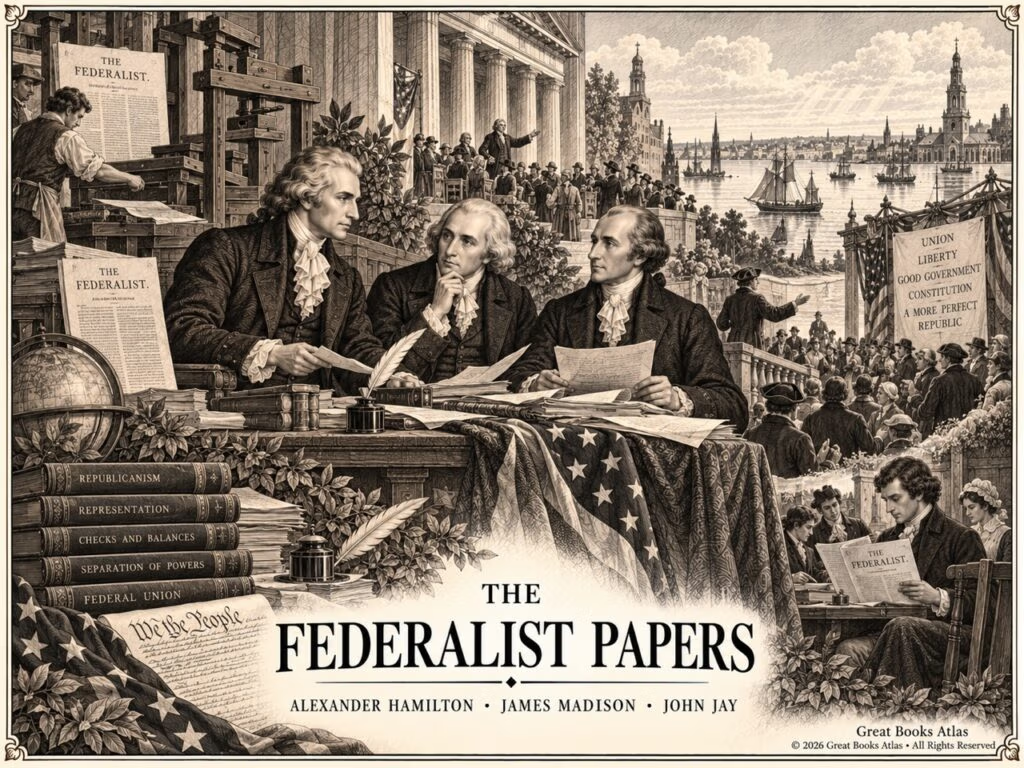
[Images were created with AI tools to set the scene and offer a glimpse of the civilization and themes behind the book. As an avid reader, I hope they spark your curiosity, but nothing replaces reading the book and picturing it for yourself. These images are meant only as inspiration.]
Author:
Alexander Hamilton, James Madison & John Jay
Time:
1787–1788
Civilizations:
Connected to:
Two Treatises of Government, The Social Contract, On Liberty, The Prince
Themes:
Power, Freedom, Justice, Leadership
Summary:
These 85 essays were published under the pen name “Publius” to persuade New Yorkers to ratify the new U.S. Constitution. Starting from a realistic view of human nature, they argue for checks and balances, so that “ambition must be made to counteract ambition” (No. 51). They also argue that a large republic can control factions (No. 10).
Ingrid’s comment: Locke and Rousseau imagined how legitimate government should begin; Hamilton, Madison, and Jay had to build one. Their insight: since men are not angels, a good constitution must work even when its leaders are not good.
Relation to other Books:
Two Treatises of Government – Locke’s ideas of natural rights, consent of the governed, and limited government shaped the American founding. The Federalist Papers turn that theory into a working design, dividing power among branches and between the states and the national government so no one can abuse the trust Locke describes. The Social Contract – Rousseau places sovereignty in the people acting directly through the general will. Madison shares the belief that power comes from the people but distrusts direct popular rule; in No. 10 he argues that a large representative republic is the best protection against factions and majority passions. On Liberty – Madison worried that a majority faction could oppress minorities; Mill, writing decades later, extends that worry beyond government to the “tyranny of the majority” exercised through social pressure and conformity. The Prince – Like Machiavelli, the authors begin from a sober view of human nature: “If men were angels, no government would be necessary” (No. 51). But where Machiavelli relies on a skillful ruler, they rely on institutions that make ambition check ambition.
Wikipedia:
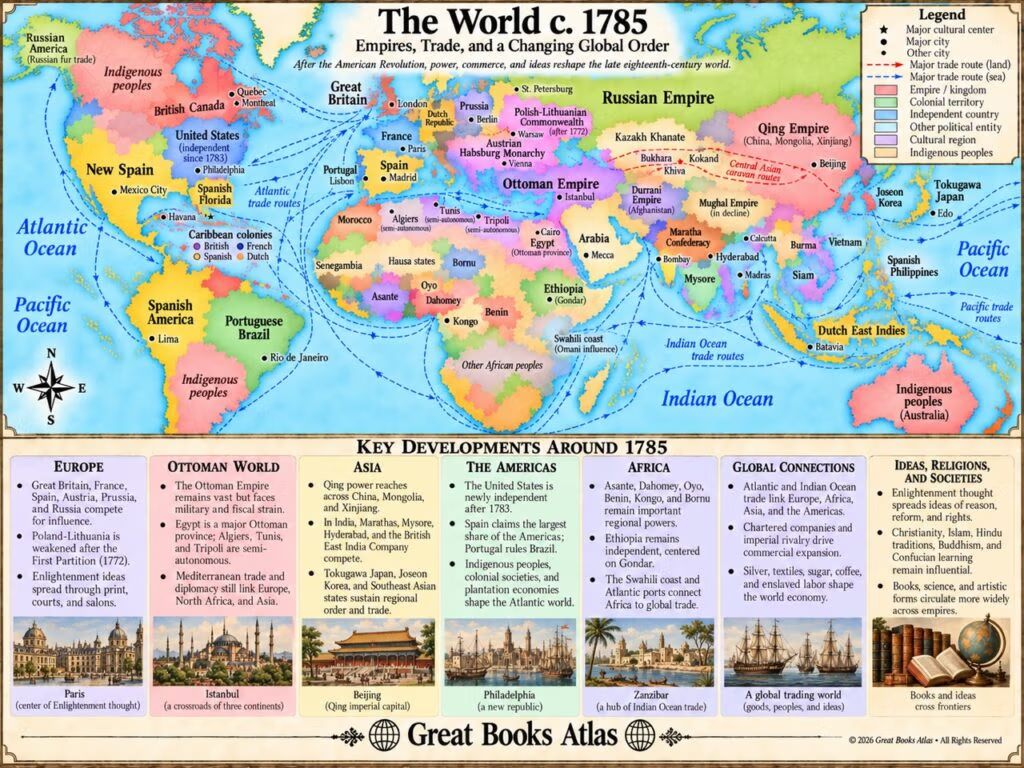
[This map was created with AI tools and is not to scale. Proportions and locations have been simplified or adjusted so all key information fits.]