The Upanishads
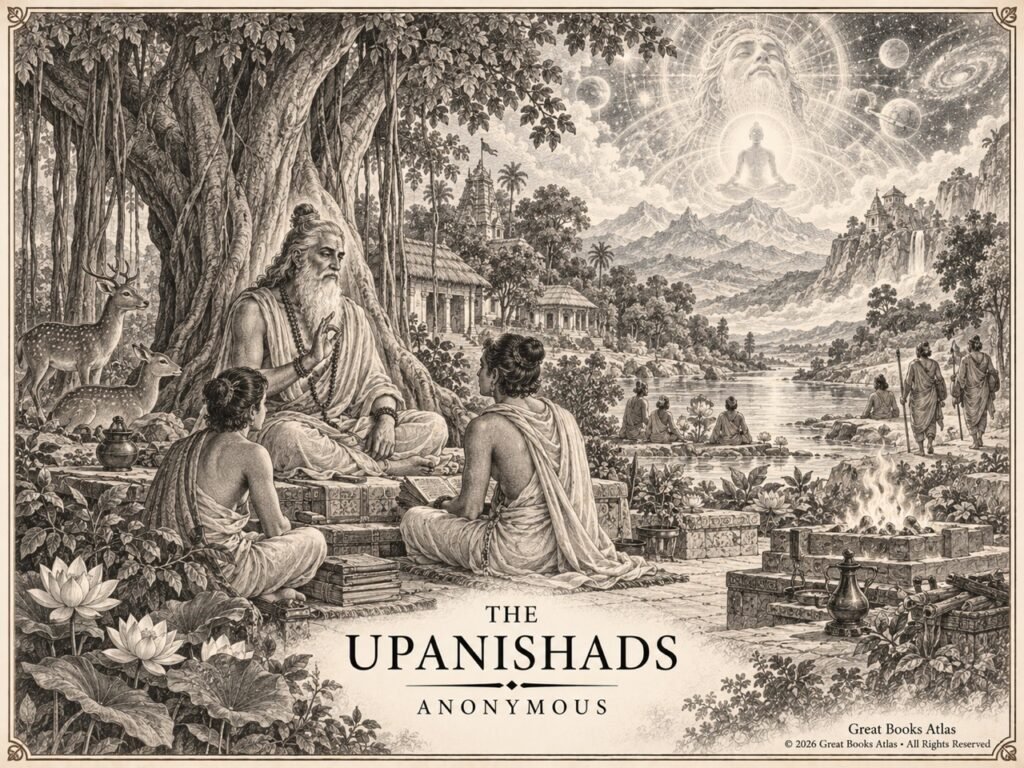
[Images were created with AI tools to set the scene and offer a glimpse of the civilization and themes behind the book. As an avid reader, I hope they spark your curiosity, but nothing replaces reading the book and picturing it for yourself. These images are meant only as inspiration.]
Author:
Anonymous sages and teachers (figures include Yajnavalkya and Uddalaka)
Time:
c. 800-300 BCE (principal Upanishads)
Civilizations:
Connected to:
Themes:
Faith & Spirituality, Truth & Knowledge, Life, and Freedom
Summary:
The Upanishads, ancient Indian philosophical and spiritual texts, explore the deepest questions of existence and teach that understanding consciousness, the self, and ultimate reality is more important than pursuing wealth, status, pleasure, or worldly achievement.
At their heart is the concept of Atman, the deepest self or consciousness beyond the changing body, thoughts, emotions, and individual ego, which must be discovered through reflection, meditation, and self-knowledge.
The texts connect Atman with Brahman, the ultimate reality underlying all existence, expressed most famously in the insight tat tvam asi (“you are that”), which comes from the Chandogya Upanishad where the father Uddalaka teaches his son Shevtaketu. In the most influential interpretation: the deepest reality within ourselves is not separate from the deepest reality of the universe.
Because ignorance causes us to identify ourselves with our temporary ego, desires, and possessions, we remain trapped in attachment and the cycle of birth and death, whereas genuine knowledge of the self leads toward liberation (moksha).
The enduring lesson of the Upanishads is that the search for meaning ultimately turns inward: by looking beyond the ego and recognizing the unity between consciousness, self, and ultimate reality, we can overcome fear, attachment, and the illusion of separateness and discover a deeper form of freedom.
Relation to other Books:
The Upanishads are essential background for understanding the Bhagavad Gita. Both ask what the ‘self’ really is. The Dhammapada responds to the same questions but denies a permanent self.
Wikipedia:
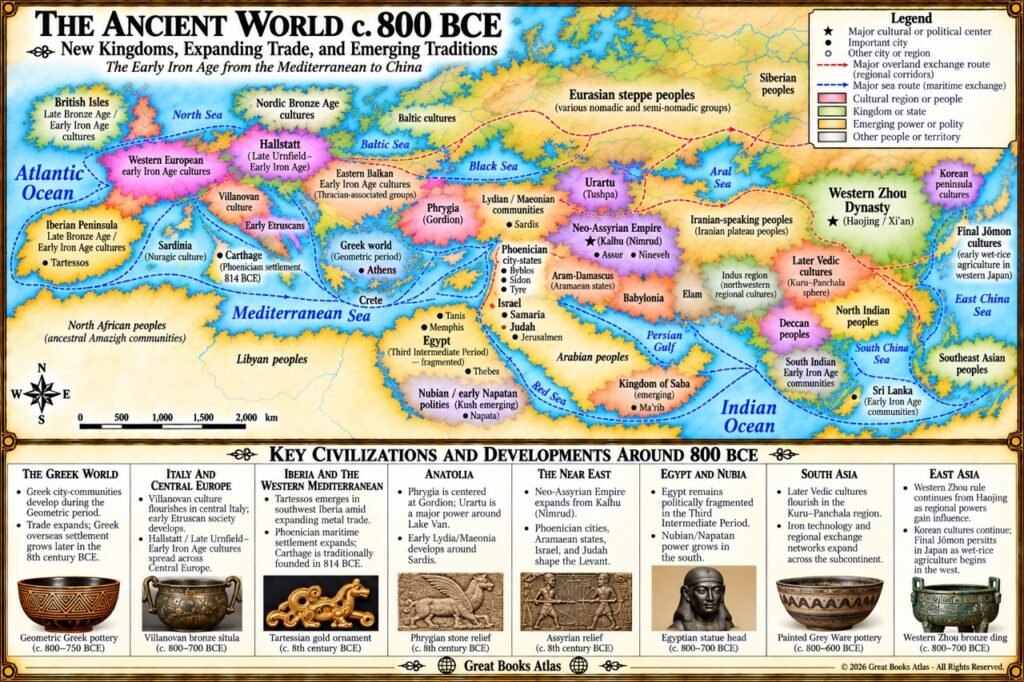
[This map was created with AI tools and is not to scale. Proportions and locations have been simplified or adjusted so all key information fits.]