The Tao Te Ching
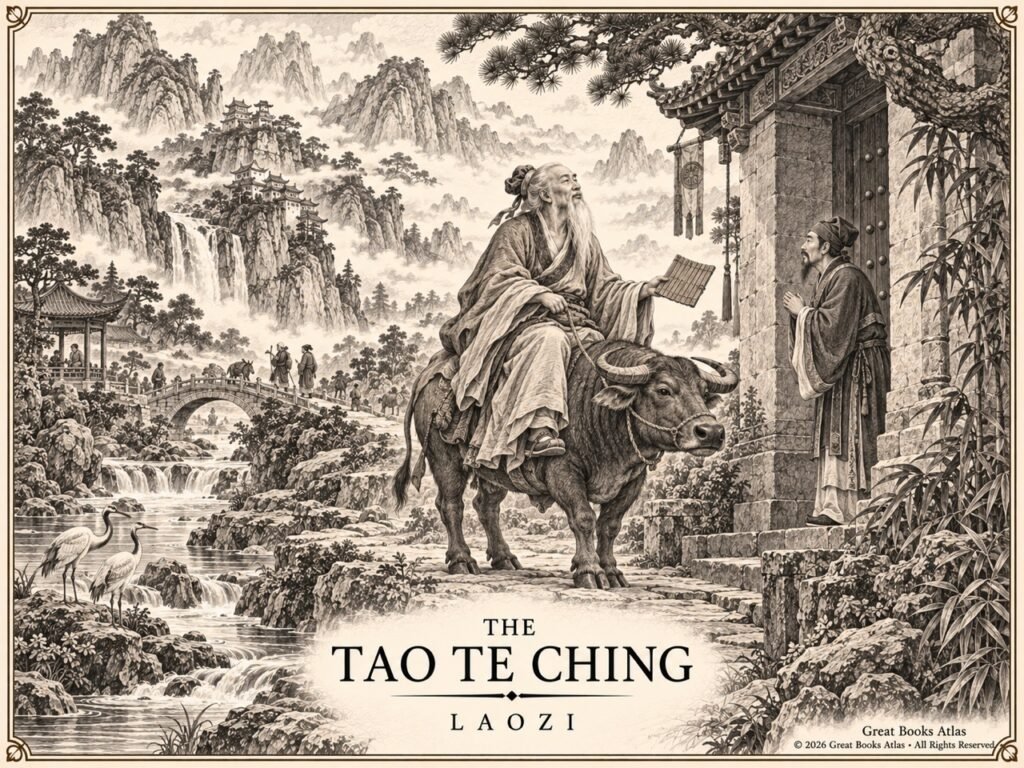
[Images were created with AI tools to set the scene and offer a glimpse of the civilization and themes behind the book. As an avid reader, I hope they spark your curiosity, but nothing replaces reading the book and picturing it for yourself. These images are meant only as inspiration.]
Author:
Attributed to Laozi (authorship debated).
Time:
4th – 3rd centuries BCE
Civilizations:
Connected to:
Themes:
Life, Happiness, Leadership, and Faith & Spirituality
Summary:
The Tao Te Ching (“The Classic of the Way and Its Power”), traditionally attributed to Laozi, teaches that a wise and fulfilling life comes from living in harmony with the Dao (also written Tao)—the underlying natural way of the universe—rather than constantly trying to control people, events, and outcomes. Te (or De) is the power or virtue that comes from living in tune with the Dao: a quiet influence rather than force. Its teaching on simplicity encourages us to reduce unnecessary desires, ambitions, possessions, and complications, suggesting that contentment often comes from recognizing what is enough rather than continually seeking more. Humility is a form of strength: like water, which benefits everything while seeking the lowest places, the wise person does not need status, recognition, or dominance and can therefore influence others without constantly asserting the self.
The principle of balance appears through complementary opposites—strength and softness, action and stillness, fullness and emptiness—and through wu wei (“effortless” or “non-forcing” action), which means responding appropriately to circumstances rather than struggling unnecessarily against the natural course of things. Much of the text is also advice for rulers, applying these ideas to leadership: “Governing a large country is like cooking a small fish” (chapter 60)—stir it too much and it falls apart. The best leader governs so lightly that when the work is done, the people say, “We did it ourselves” (chapter 17). The enduring lesson of the Tao Te Ching is that a good life often comes not from acquiring more, controlling more, or achieving more. It comes from simplifying our desires, remaining humble, knowing when to act and when to let go, and finding balance by working with life rather than constantly forcing it in the direction we want.
Ingrid’s comment: A remarkable counterweight to our modern urge to optimize and control everything.
Relation to other Books:
The Tao Te Ching is often read alongside the Analects as its counterpart: where Confucius stresses ritual, duty and self-improvement, Laozi urges letting go and returning to simplicity. Zhuangzi develops its ideas with humor and stories. Its call to reduce desire echoes the Dhammapada, and its acceptance of the natural order has much in common with Marcus Aurelius’s Meditations.
Wikipedia:
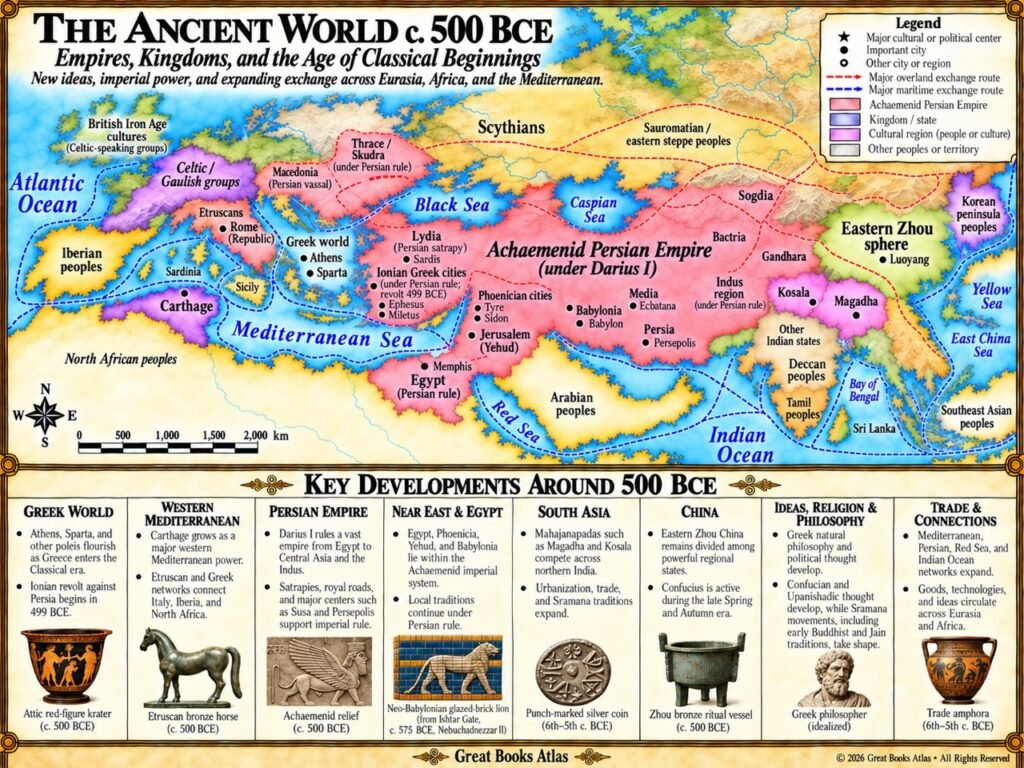
[This map was created with AI tools and is not to scale. Proportions and locations have been simplified or adjusted so all key information fits.]