The Analects
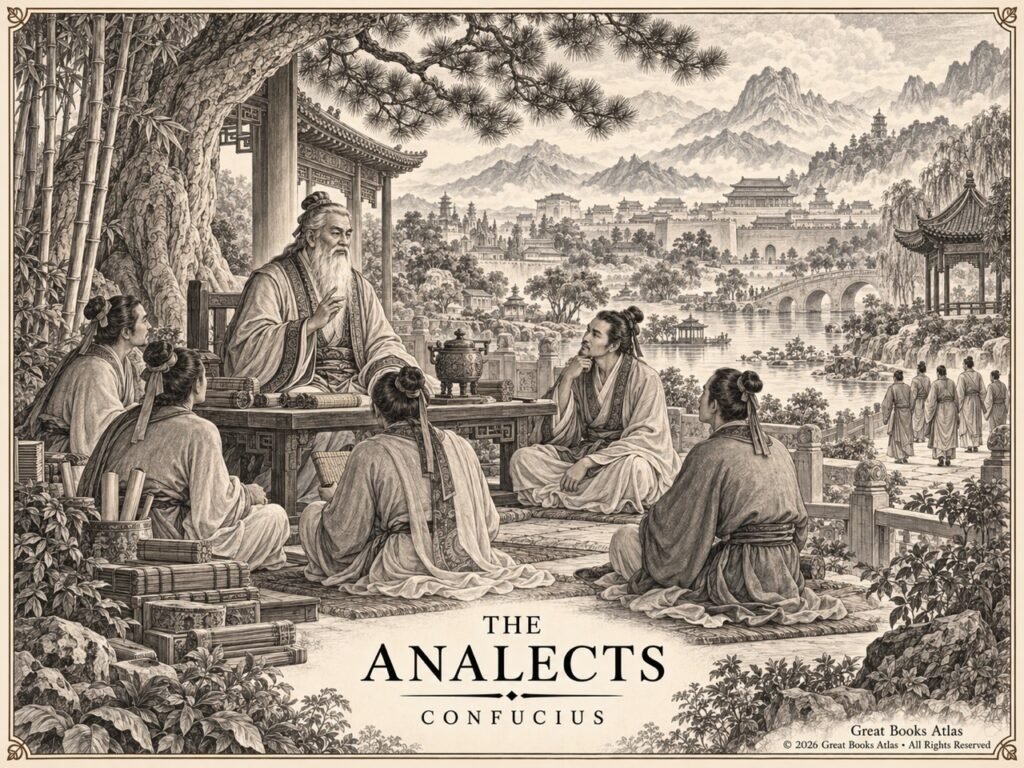
[Images were created with AI tools to set the scene and offer a glimpse of the civilization and themes behind the book. As an avid reader, I hope they spark your curiosity, but nothing replaces reading the book and picturing it for yourself. These images are meant only as inspiration.]
Author:
Attributed to Confucius (551–479 BCE); compiled by his disciples.
Time:
5th – 3rd centuries BCE
Civilizations:
Connected to:
The Dhammapada, The Aeneid, Meditations
Themes:
Duty, Leadership, Love, and Truth & Knowledge
Summary:
The Analects, a collection of sayings and conversations associated with Confucius and his disciples, teaches that a good society begins with good character, developed through integrity, self-discipline, humility, compassion, and the continual effort to become a junzi, an exemplary person.
Regarding relationships, Confucius emphasizes ren (humaneness), li (proper conduct) and xiao (filial piety, respect for parents and ancestors), arguing that respect, empathy, loyalty, and reciprocity within families and communities create the foundation for social harmony.
Education is presented not merely as acquiring knowledge but as a lifelong process of reflection, practice, and moral self-improvement, with true wisdom requiring both learning from others and examining one’s own behavior.
On leadership, the Analects argues that the most effective ruler leads primarily through personal virtue and example rather than fear or punishment: when leaders behave with integrity and responsibility, others are more likely to follow willingly.
Its enduring lesson about duty is that a meaningful and orderly life is built by fulfilling our responsibilities toward others while continually improving ourselves-cultivate one’s character, treat people with humanity, keep learning, fulfill one’s obligations, and lead by becoming the kind of person one would want others to follow.
Ingrid’s comment: Confucius rarely speaks about gods or the afterlife. His focus is on how we treat the people right in front of us, which makes the Analects feel surprisingly modern.
Relation to other Books:
Like the Bhagavad Gita, the Analects asks how to fulfill one’s duty, but it places that duty in family and social roles rather than in a spiritual path. Its ideal of leading by virtue echoes Plato’s philosopher-king in The Republic, and its focus on self-cultivation parallels Aristotle’s Nicomachean Ethics and Marcus Aurelius’s Meditations. The Dhammapada shares its emphasis on self-discipline, while the Aeneid’s pietas (duty to family, gods and country) closely resembles Confucian loyalty and filial piety.
Wikipedia:
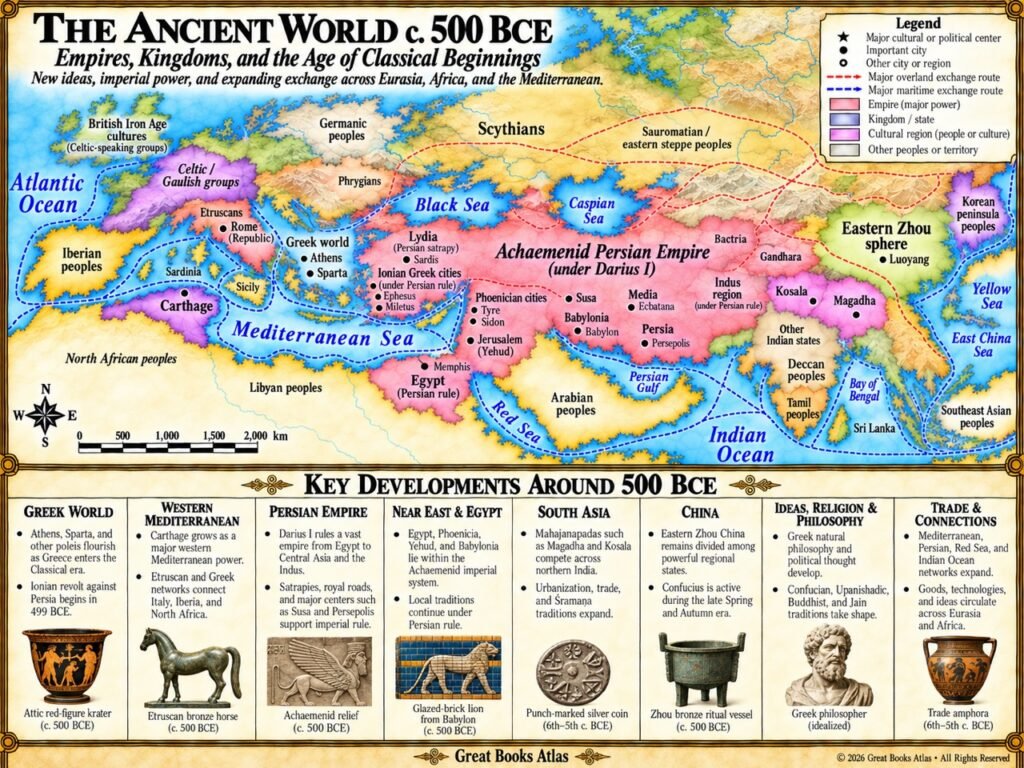
[This map was created with AI tools and is not to scale. Proportions and locations have been simplified or adjusted so all key information fits.]