Renaissance and the discovery of the individual
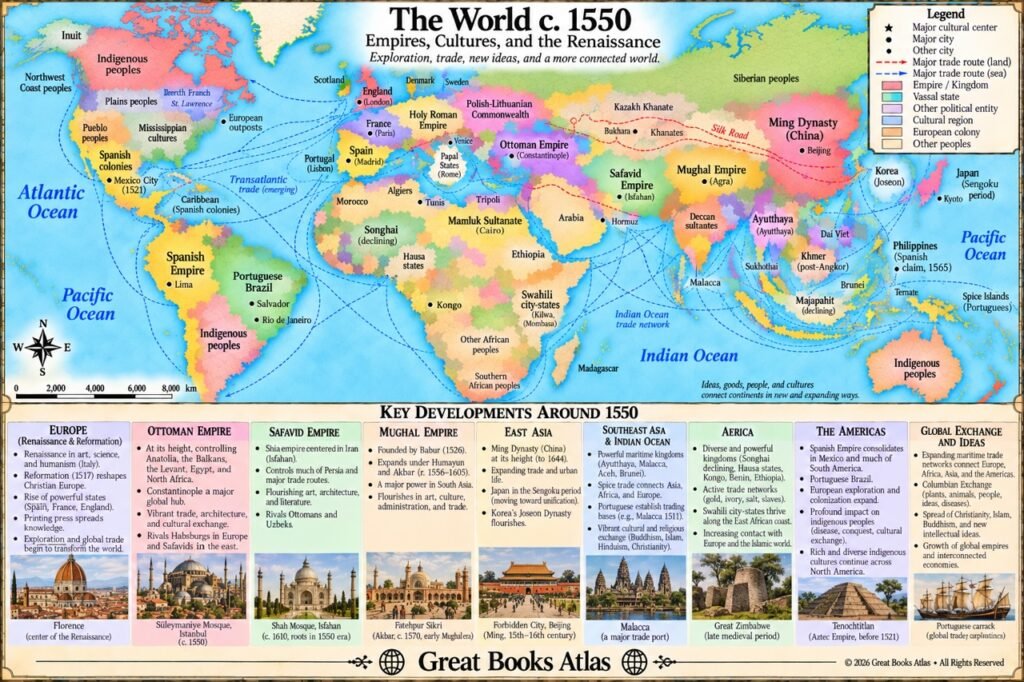
In 15th century Italy, a revival of interest in classical learning and secular studies gave rise to the Renaissance. The movement soon spread to Northern Europe, reshaping the continent’s cultural landscape. The following three books are all cornerstones of Renaissance thinking, shifting the focus of literature and philosophy away from divine intervention and toward human agency, psychology, and intellect. Machiavelli examines what leaders can achieve through their own virtu (ability and willpower) rather than relying on fate or God. Montaigne pioneers self-examination, famously asking “What do I know?”, making the individual human mind his primary subject. And Shakespeare creates a protagonist who is the ultimate Renaissance individual: a student of philosophy who relies on his own internal monologue, reason, and intellect to navigate his crisis. Scholars have long noted a massive intellectual overlap between Montagne’s Essays and Shalespeare’s Hamlet.
You could start here:
The Prince, 1513, Niccolò Machiavelli
Essays, 1580, Michel de Montaigne
Hamlet, c. 1600, William Shakespeare
… more books:
by Miguel de Cervantes, 1606/1615, Spain
Summary: After reading too many romances of chivalry, Don Quixote decides to become a knight-errant and travels through Spain with the practical Sancho Panza. His adventures create a profound exploration of the boundary between ideals and reality and of whether noble illusions can sometimes make life more meaningful.
Themes: Meaning of Life, Idealism, Reality, Friendship, Honor, Identity, Duty, Freedom, Madness
William Shakespeare, c. 1595, England
Summary: Romeo Montague and Juliet Capulet fall in love despite the violent feud between their families. Their deaths transform a private love story into an indictment of hatred, inherited conflict, impulsiveness, and social division.
Themes: Love, Mortality, Fate, Family, Conflict, Loyalty, Violence, Youth, Reconciliation
even more Books…
To our Timelines
To our Maps