The Social Contract
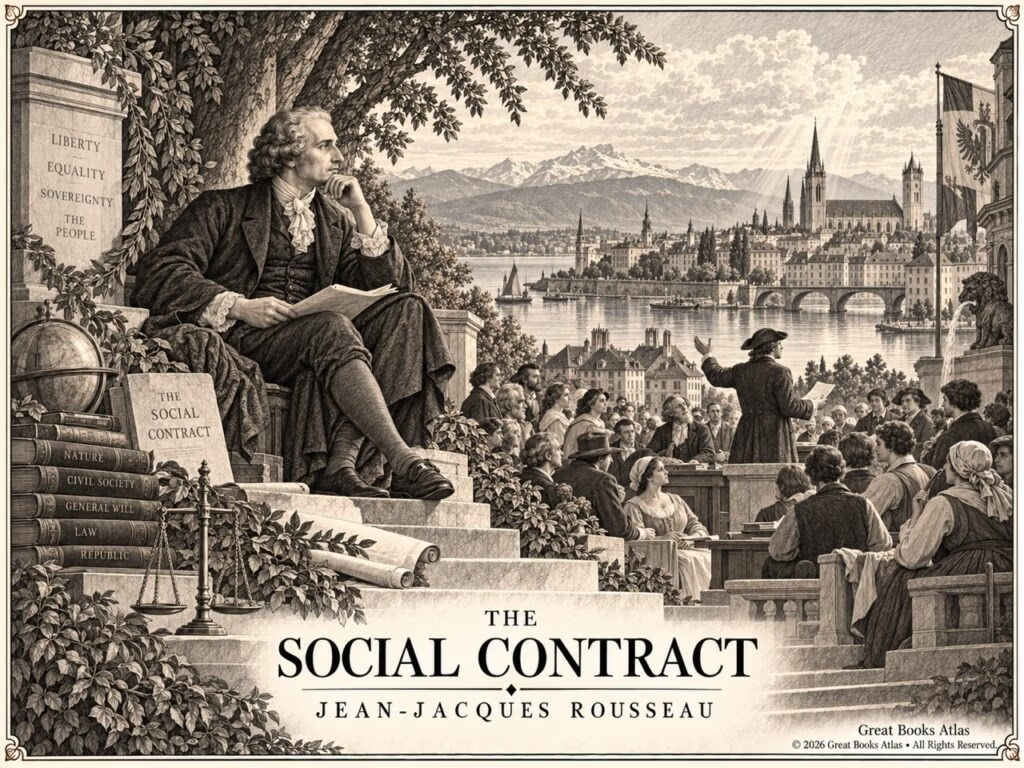
[Images were created with AI tools to set the scene and offer a glimpse of the civilization and themes behind the book. As an avid reader, I hope they spark your curiosity, but nothing replaces reading the book and picturing it for yourself. These images are meant only as inspiration.]
Author:
Time:
1762 CE
Civilizations:
Connected to:
The Federalist Papers, Two Treatises of Government, On Liberty
Themes:
Summary:
“Man is born free, and everywhere he is in chains.” Rousseau asks what could make political authority legitimate. His answer is a community in which citizens obey laws they give themselves, through the “general will.” His radical idea of popular sovereignty inspired the French Revolution and still raises the question of how individual freedom fits with the demands of the community – and how the “general will” differs from mere majority opinion.
Ingrid’s comment: Locke wanted government to protect our freedom; Rousseau asks something bolder – can we remain free while living under laws at all? His answer: only if the laws are truly our own.
Relation to other books:
Two Treatises of Government – Both Locke and Rousseau ground legitimate authority in an agreement among free people. But Locke’s citizens keep individual rights the state must protect, while Rousseau’s citizens unite into a sovereign body expressing the “general will” – the difference between liberal individualism and popular sovereignty. The Federalist Papers – The American founders shared Rousseau’s belief that power must rest with the people, but they distrusted direct popular rule. Instead of one undivided general will, they designed a representative republic with separated powers and checks and balances to restrain factions and majorities. On Liberty – Mill warns that the “tyranny of the majority” can crush individuality, a danger critics have also seen in Rousseau’s claim that whoever refuses to obey the general will may be “forced to be free.” Read together, they pose a central question of democracy: how much may the community demand of the individual? The Republic – Like Plato, Rousseau imagines a political community that shapes its citizens’ character and even proposes a “civil religion” to bind them. Rousseau, however, places sovereignty in the people as a whole rather than in philosopher-kings.
Wikipedia:
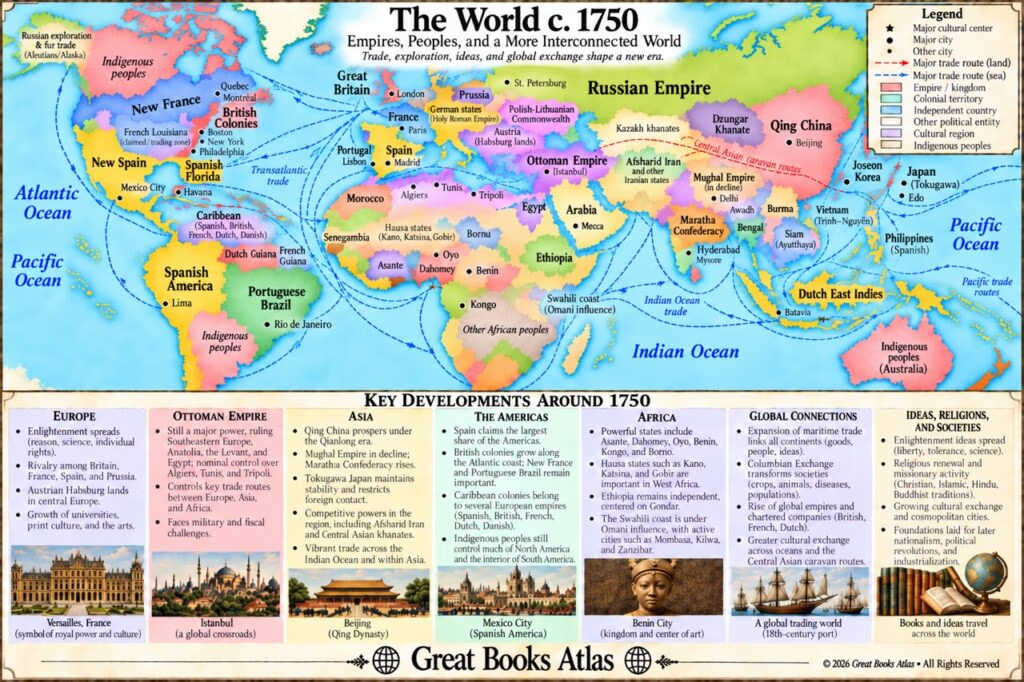
[This map was created with AI tools and is not to scale. Proportions and locations have been simplified or adjusted so all key information fits.]