Two Treatises of Government
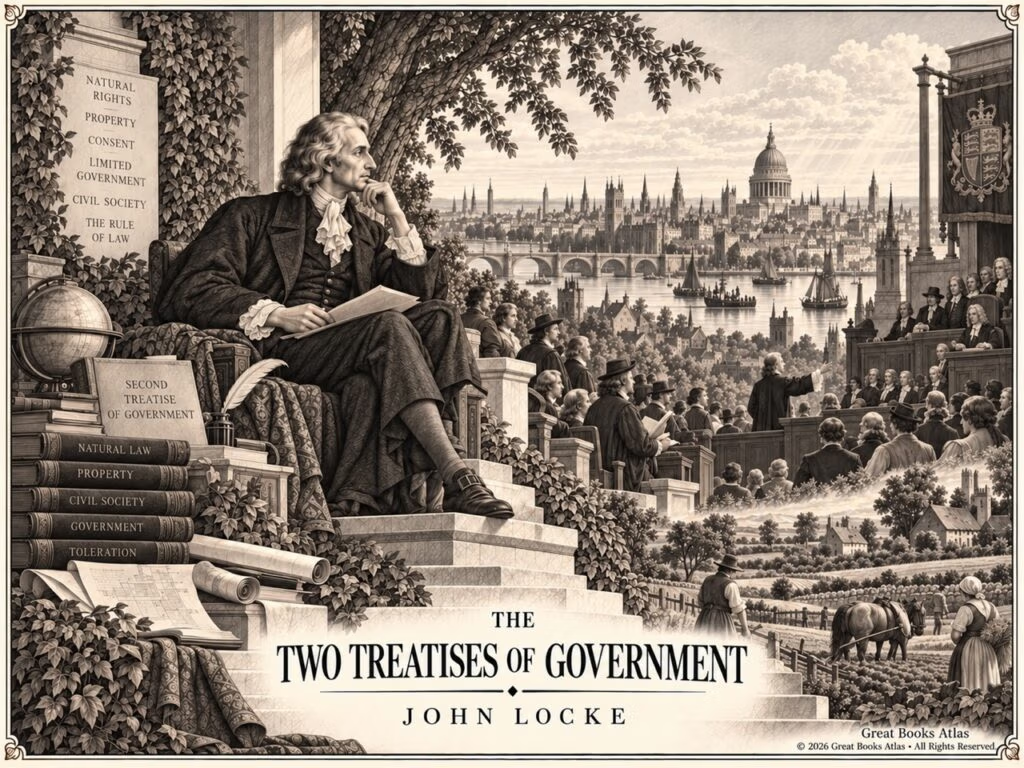
[Images were created with AI tools to set the scene and offer a glimpse of the civilization and themes behind the book. As an avid reader, I hope they spark your curiosity, but nothing replaces reading the book and picturing it for yourself. These images are meant only as inspiration.]
Author:
Time:
1689 (title page dated 1690)
Civilizations:
Connected to:
The Federalist Papers, The Social Contract, The Prince, On Liberty
Themes:
Summary:
Locke argues that people are born with natural rights to life, liberty and property. Governments exist only to protect those rights, and they rule only with the consent of the governed. If a ruler violates that trust, the people may resist and replace him, an idea that later shaped the American Declaration of Independence.
Ingrid’s comment: Machiavelli asked how a ruler keeps power; Locke asks a revolutionary new question – by what right does anyone hold power at all? His answer, the consent of the governed, still underlies modern democracy.
Relation to other Books:
The Social Contract – Rousseau, like Locke, grounds legitimate government in an agreement among free people. But where Locke’s citizens keep their individual rights against the state, Rousseau’s citizens join a collective “general will” – the difference between liberal individualism and popular sovereignty. The Federalist Papers – Locke’s ideas of natural rights, consent, and limited government reached America through the Declaration of Independence. The Federalist Papers turn that theory into practice, designing a constitution with separated powers so that no branch can abuse the trust Locke describes. On Liberty – Locke limits what government may do to the individual; Mill, writing in the 19th century, goes further and warns that society itself – public opinion and conformity – can threaten freedom as much as any ruler.
The Prince – Machiavelli treats power as something to be gained and kept; Locke treats it as a trust held on behalf of the people, which may be taken back if abused. Together they mark the shift from the art of ruling to the question of legitimacy.
Wikipedia:
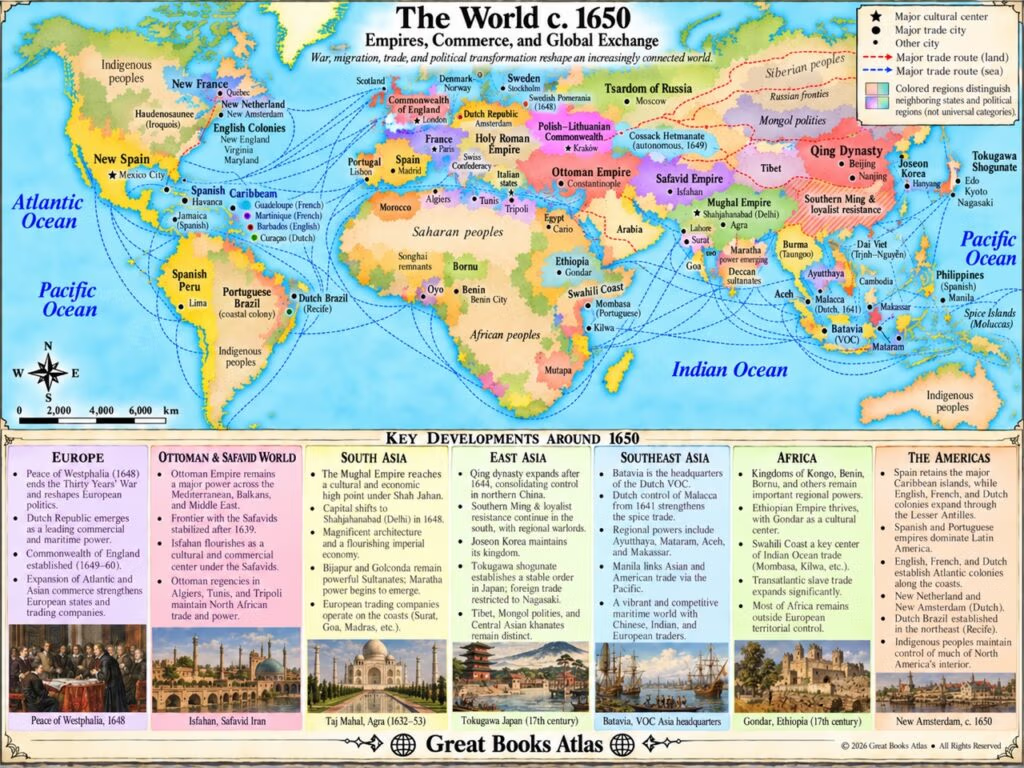
[This map was created with AI tools and is not to scale. Proportions and locations have been simplified or adjusted so all key information fits.]