The Dhammapada
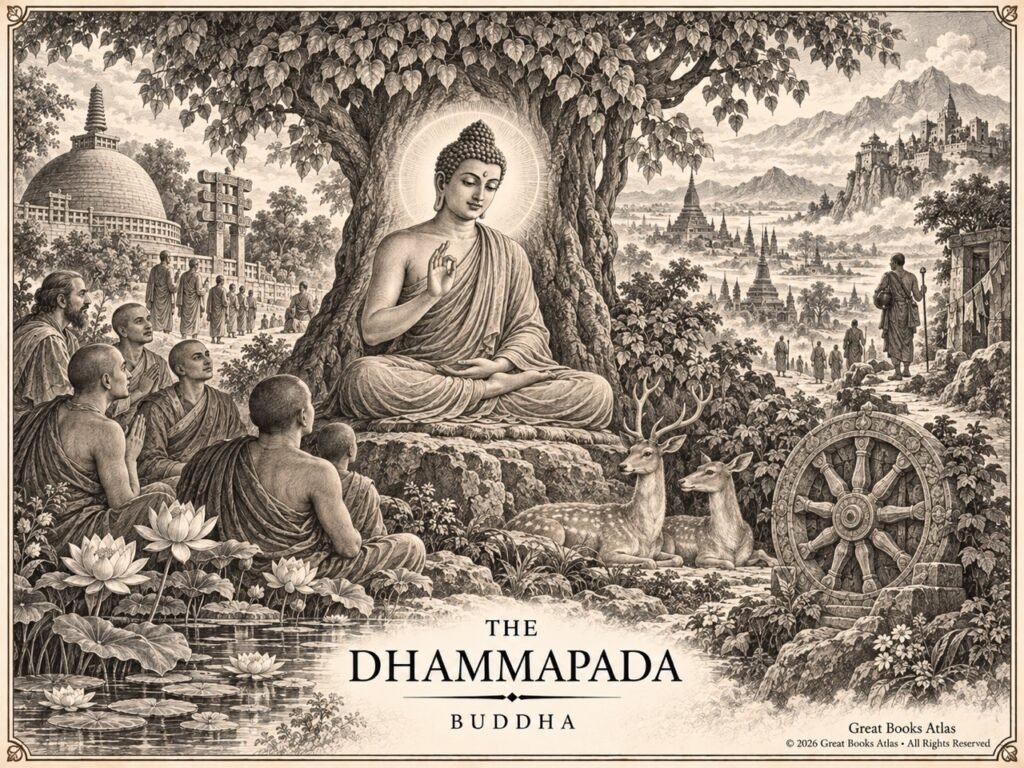
[Images were created with AI tools to set the scene and offer a glimpse of the civilization and themes behind the book. As an avid reader, I hope they spark your curiosity, but nothing replaces reading the book and picturing it for yourself. These images are meant only as inspiration.]
Author:
Attributed to the Buddha; compiled by his followers.
Time:
c. 3rd century BCE (compiled); written down in the 1st century BCE in Sri Lanka.
Civilizations:
Connected to:
Bhagavad Gita, The Analects, Nicomachean Ethics, Meditations (Marcus Aurelius), The Divine Comedy
Themes:
Mortality, Freedom, Happiness, and Life
Summary:
The Dhammapada, a collection of 423 verses in Pali, attributed to the Buddha, presents human life as profoundly shaped by the mind and teaches that our thoughts, intentions, and actions determine whether we move toward suffering or inner freedom.
It identifies desire—especially craving, attachment, and the attempt to hold onto what inevitably changes—as a major source of suffering, teaching that lasting happiness comes not from acquiring more but from loosening our attachment to what we want and fear losing.
Through awareness and mindfulness, we learn to observe our thoughts, emotions, and impulses without automatically being controlled by them, allowing wisdom, compassion, and self-discipline to replace anger, greed, and delusion. Recognition of mortality and impermanence is central: everything we possess and experience is subject to change and death—even the self we ordinarily identify with. Buddhism calls this anatta (“no-self”): there is no permanent, unchanging self, only a constantly changing flow of body and mind. Accepting impermanence helps us live more wisely and appreciate the present without clinging to it. The path toward liberation (nirvana) therefore lies in transforming the mind through ethical conduct, awareness, wisdom, and freedom from craving. Its enduring message is that we cannot prevent change, loss, suffering, or death, but we can change our relationship to them and thereby become inwardly free.
Ingrid’s comment: Short but extraordinarily rich. Read it against the Bhagavad Gita: both see attachment as a source of suffering, but while the Gita teaches an eternal self (Atman), the Dhammapada teaches that there is no permanent self at all (anatta).
Relation to other Books:
The Dhammapada shares the Bhagavad Gita’s concern with desire and attachment, but rejects the idea of a permanent self (Atman). Like Aristotle’s Nicomachean Ethics and Marcus Aurelius’s Meditations, it treats the good life as the result of training character and mind. Dante’s Divine Comedy also depicts a journey from suffering toward liberation, though within a Christian framework.
Wikipedia:
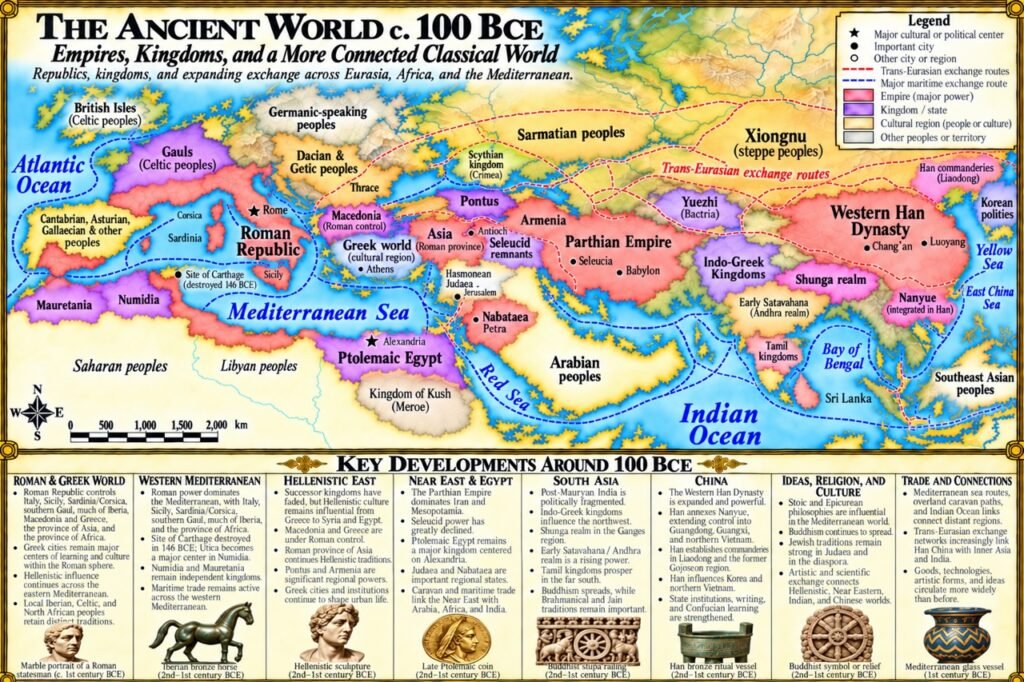
[This map was created with AI tools and is not to scale. Proportions and locations have been simplified or adjusted so all key information fits.]