The Bhagavad Gita
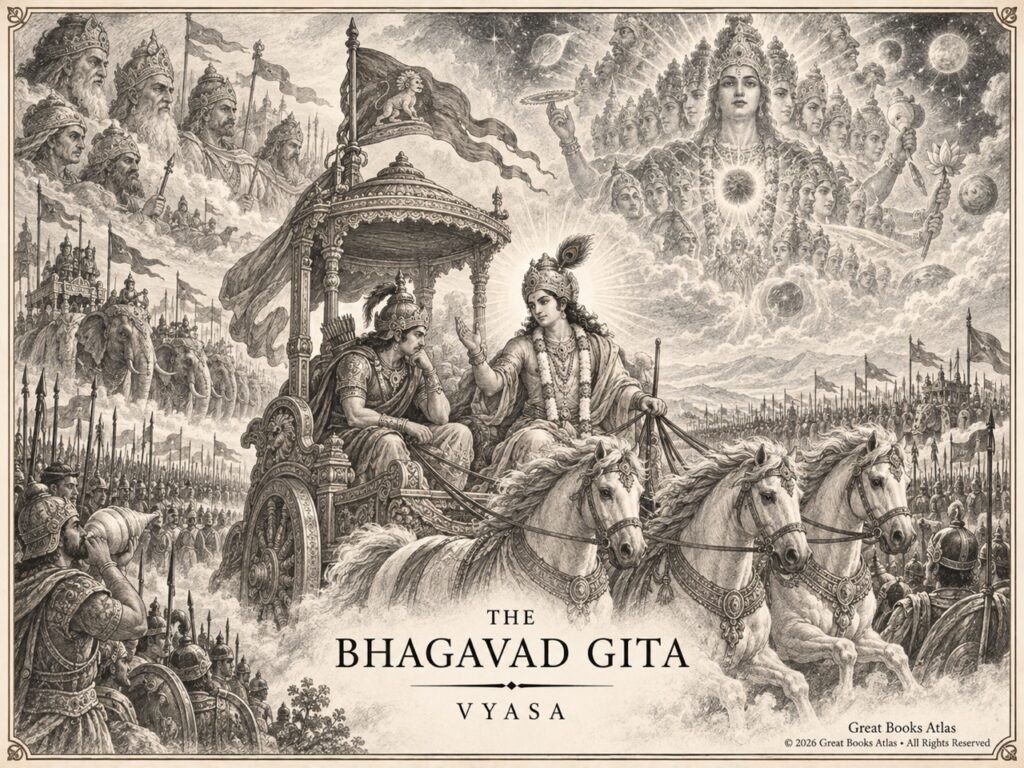
[Images were created with AI tools to set the scene and offer a glimpse of the civilization and themes behind the book. As an avid reader, I hope they spark your curiosity, but nothing replaces reading the book and picturing it for yourself. These images are meant only as inspiration.]
Author:
traditionally Vyasa
Time:
c. 2nd century BCE – 200 CE
Civilizations:
Connected to:
Upanishads, Mahabharata, The Iliad, The Analects, The Aeneid, War and Peace
Themes:
Duty, Faith & Spirituality, Freedom, War, and Life
Summary:
In the Bhagavad Gita, the warrior Arjuna stands on the battlefield of Kurukshetra, paralyzed by doubt, because fulfilling his duty (dharma) would require fighting his own cousins, teachers and elders. His charioteer Krishna, an incarnation of the god Vishnu, teaches him how to act when moral responsibility conflicts with personal emotion.
Krishna argues that we cannot avoid action because life inevitably requires choices, but we should act according to what is right rather than out of fear, selfish desire, or concern for personal advantage.
The central principle of detachment is therefore not indifference or withdrawal from life, but doing one’s best while relinquishing attachment to success, failure, reward, or recognition-focus on the quality of our actions, not on controlling their outcomes.
On spirituality, the Gita teaches that the deepest self (Atman) is more than the temporary body and ego, and that spiritual liberation can be approached through disciplined action, knowledge, meditation, and loving devotion to the divine.
Its enduring message is that a meaningful life combines responsibility with inner freedom: know our duty, act courageously and ethically, accept what we cannot control, master the ego, and understand our individual life as part of a larger spiritual reality.
Ingrid’s comment: Arjuna’s dilemma becomes universal: “What should I do when my responsibilities conflict with my emotions and desires?”
Relation to other Books:
The Iliad, The Aeneid and War and Peace all deal with a warrior’s duty and the moral weight of war. The Analects addresses duty within roles.
Wikipedia:
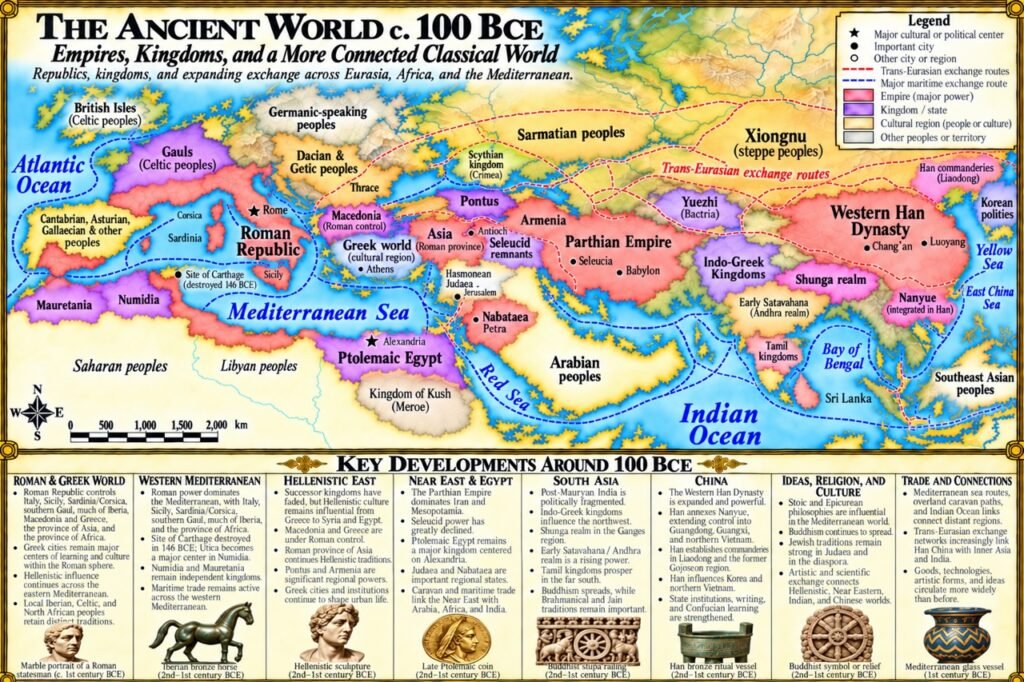
[This map was created with AI tools and is not to scale. Proportions and locations have been simplified or adjusted so all key information fits.]